
Post-Operative Rehabilitation Physiotherapy
Assessment-Led Rehabilitation & Treatment
Condition Overview
Rehabilitation following orthopaedic surgery is critical to restore joint range of motion, build muscle strength, and prevent stiffness. Whether recovering from ligament repairs or tendon attachments, structured physical therapy coordinates with your surgeon's protocols to support a safe, phased recovery.
Possible Contributors
Factors that commonly play a role in this condition (individual diagnosis depends on assessment):
- Surgeries such as ACL reconstruction, meniscus repairs, or rotator cuff stitching
- Post-surgical joint immobilization leading to muscle atrophy
- Localized swelling and scar tissue formation around incision sites
- Pain and guarding preventing natural joint movements
Common Symptoms & Functional Imbalances
- Stiffness and significant range of motion restrictions after surgery
- Muscle weakness and atrophy around the operated area
- Local joint swelling, tightness, and surgical site sensitivity
- Difficulty performing daily transfers (standing, walking, stairs)
How Physiotherapy Can Support Recovery
- •Structuring safe, early passive movements to prevent joint stiffness.
- •Re-educating muscles using targeted voluntary contractions and NMES.
- •Applying safe tissue mobilization styles to manage surgical scar tightness.
- •Ensuring progression aligns with specific post-op tissue healing timelines.
Safety Warning: When to Seek Medical Evaluation
Please consult a medical doctor or visit an emergency room immediately if you experience any of the following:
- Sudden severe pain, swelling, and redness in the calf (potential DVT)
- Fever, pus, or widening redness around incision sites (potential infection)
- Sudden shortness of breath or chest pain
- Complete failure of a surgical repair accompanied by a popping sound
* Physiotherapy is a support tool and is not appropriate for active infections, major structural fractures, or progressive neurological emergencies.
Treatment Settings
Home visits are highly recommended in the initial weeks post-surgery when traveling is difficult or contraindicated. Transitioning to the clinic is ideal once walking stability is restored.
Director and Senior Physiotherapist
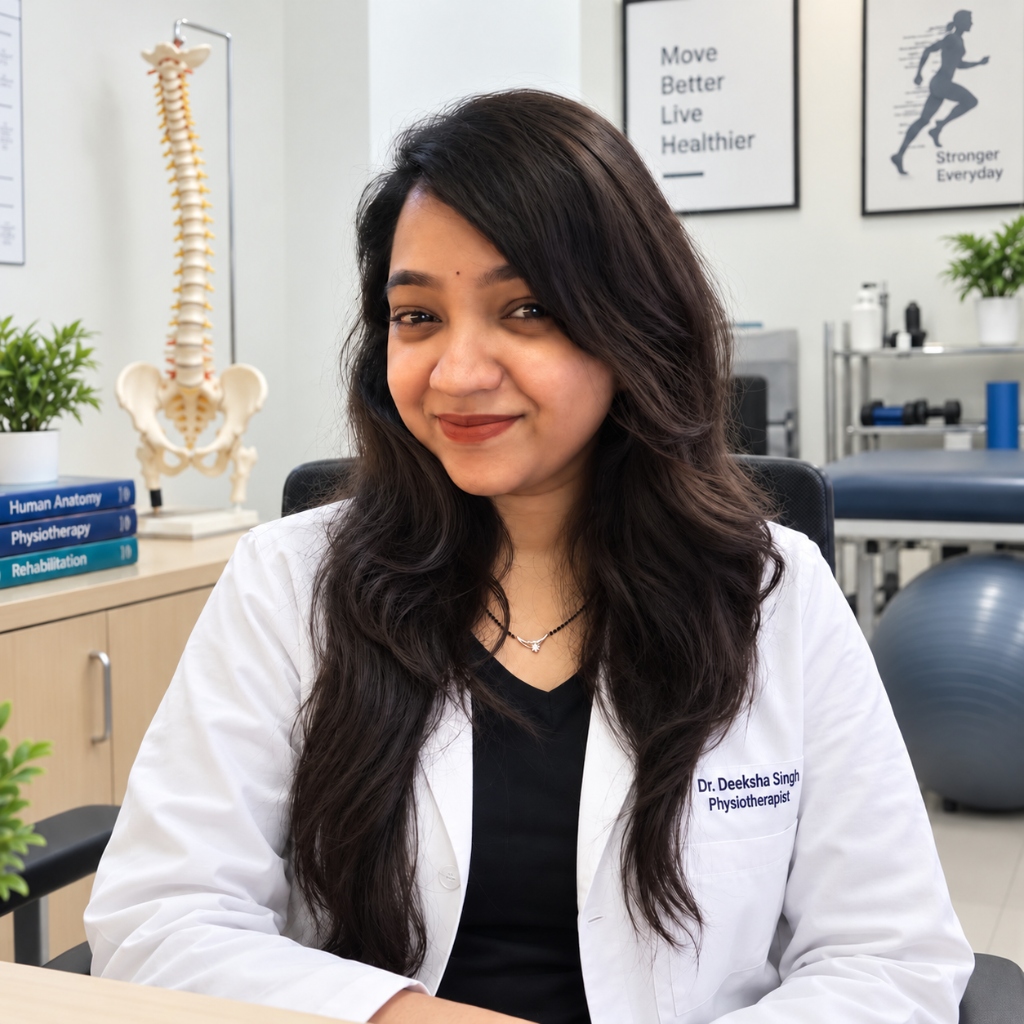
Dr. Deeksha Singh
BPT · MPT (Orthopaedics) · MIAP
All physical therapies and assessment-led roadmaps are designed and supervised by Dr. Deeksha.
View doctor profile →Your First Session
During your initial evaluation, we typically check:
- →Review of surgical notes, protocols, and surgeon guidelines
- →Incision site safety checks and local swelling measurements
- →Passive and active joint range of motion checks
- →Evaluation of mobility transfers and assistive device usage
Common Interventions
- Gentle Passive & Active-Assisted Movements
- NMES (Neuromuscular Electrical Stimulation) for muscle activation
- Gentle Scar Tissue Mobilization
- Graded Muscle Strengthening Protocols
- Swelling Management (Compression, Elevation, Cold Therapy)
Post-Operative Rehabilitation FAQ
Frequently asked questions about therapy duration and outcomes.
When should post-operative physiotherapy begin?
The start date depends on the type of surgery and your surgeon's specific protocol. Many orthopaedic surgeries require gentle mobility exercises to begin within days to prevent joint stiffness.
Why is muscle re-education important after surgery?
Surgical trauma and local swelling can temporarily inhibit nerve signals to muscles. Using targeted contractions and muscle stimulators helps reactivate the muscles to prevent severe atrophy.
Related Rehabilitation Resources
Ready to start your recovery?
Book a clinic appointment or request a home physiotherapy visit.