
Sports Injuries Physiotherapy
Assessment-Led Rehabilitation & Treatment
Condition Overview
Sports physical therapy addresses sprains, strains, and joint injuries sustained during athletic activities. Graded rehabilitation focuses not only on tissue healing and pain management but also on restoring coordinated balance, movement biomechanics, and structural strength to reduce the risk of future strains.
Possible Contributors
Factors that commonly play a role in this condition (individual diagnosis depends on assessment):
- Sudden overloading of tendons or muscles during training
- Improper movement mechanics or poor shoe support
- Muscle strength imbalances between opposing muscle groups
- Inadequate rest periods leading to repetitive overuse injuries
Common Symptoms & Functional Imbalances
- Localized pain, swelling, or bruising over a joint or muscle
- Difficulty bearing weight or performing high-impact movements
- Reduced flexibility or joint range of motion after an impact
- Feeling of joint weakness or instability during sports drills
How Physiotherapy Can Support Recovery
- •Designing phased, progressive tissue loading plans to rebuild strength.
- •Analyzing movement patterns to identify biomechanical vulnerabilities.
- •Integrating balance (proprioception) and agility drills into recovery.
- •Guiding a gradual, phased return to athletic training programs.
Safety Warning: When to Seek Medical Evaluation
Please consult a medical doctor or visit an emergency room immediately if you experience any of the following:
- Visible joint deformity or bone misalignment after an impact
- Complete inability to move a joint or bear weight immediately after injury
- Severe joint swelling that occurs within minutes of the trauma
- Loss of sensation, tingling, or coldness in the hands or feet
* Physiotherapy is a support tool and is not appropriate for active infections, major structural fractures, or progressive neurological emergencies.
Treatment Settings
Clinic visits are best for sports rehab to utilize balance boards, weighted resistance equipment, and functional space for agility drills. Home care is suitable for early pain control.
Director and Senior Physiotherapist
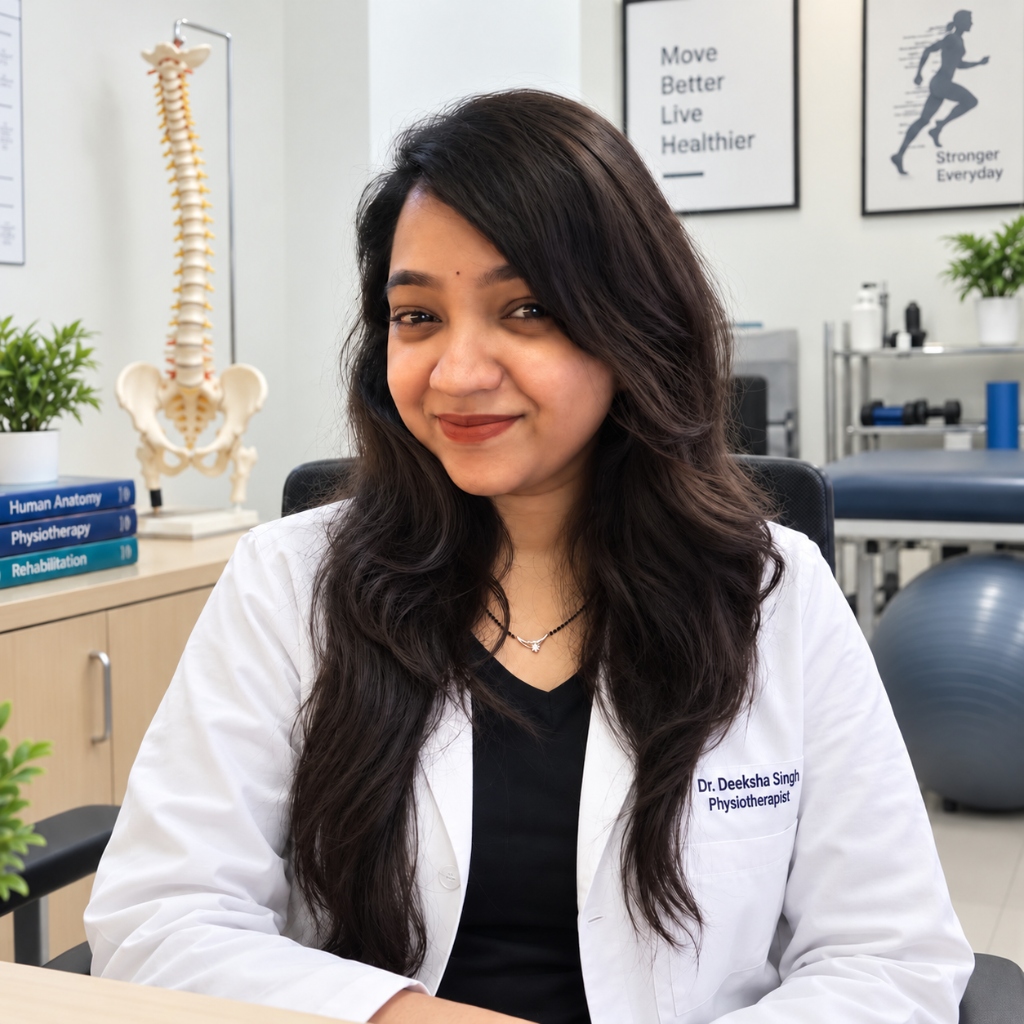
Dr. Deeksha Singh
BPT · MPT (Orthopaedics) · MIAP
All physical therapies and assessment-led roadmaps are designed and supervised by Dr. Deeksha.
View doctor profile →Your First Session
During your initial evaluation, we typically check:
- →Joint stability and ligament integrity tests
- →Muscle strength balance comparisons (injured vs. uninjured side)
- →Functional movement checks (squatting, landing, jumping)
- →Local swelling and tissue sensitivity checks
Common Interventions
- Phased Loading & Strengthening Exercises
- Balance & Agility Drills (Proprioception)
- Cupping & IASTM for localized tissue mobilization
- Kinesiology Taping for support during movement retraining
- Localized Cold Therapy (Cryotherapy)
Sports Injuries FAQ
Frequently asked questions about therapy duration and outcomes.
When can I return to sports after a sprain?
Return-to-play timelines depend on the severity of the ligament sprain. A structured assessment of strength, balance, and pain-free movement is essential before returning to active training.
Is complete rest always required for sports injuries?
While early protection is important, complete rest can lead to muscle atrophy and stiffness. Active recovery, using graded movement that does not aggravate the injury, supports faster tissue adaptation.
Related Rehabilitation Resources
Ready to start your recovery?
Book a clinic appointment or request a home physiotherapy visit.