
Stroke Rehabilitation Physiotherapy
Assessment-Led Rehabilitation & Treatment
Condition Overview
A stroke can affect motor signals, leading to hemiplegia (weakness on one side of the body), spasticity, and balance imbalances. Neurological physiotherapy is designed to encourage neuroplasticity—the brain's ability to reorganize pathways—to help relearn movements, improve balance, and support daily independence.
Possible Contributors
Factors that commonly play a role in this condition (individual diagnosis depends on assessment):
- Ischemic or hemorrhagic stroke causing motor pathway damage
- Inhibition of voluntary muscle movement on the affected side
- Development of abnormal muscle tightness or spasticity
- Balance and sensory processing imbalances after brain trauma
Common Symptoms & Functional Imbalances
- Weakness or paralysis down one side of the face, arm, or leg (hemiparesis)
- Difficulty with balance, coordination, and independent walking
- Spasticity or stiffness in the fingers, wrist, elbow, or ankle joints
- Difficulty performing daily tasks such as dressing, eating, or transfers
How Physiotherapy Can Support Recovery
- •Designing repetitive, task-oriented exercises to support neural pathways.
- •Facilitating muscle movement on the weak side through sensory inputs.
- •Managing abnormal muscle spasticity using targeted stretches and splinting.
- •Retraining standing balance, transfers, and safe walking mechanics.
Safety Warning: When to Seek Medical Evaluation
Please consult a medical doctor or visit an emergency room immediately if you experience any of the following:
- Sudden face drooping, arm weakness, or speech difficulty (F.A.S.T. - new stroke)
- Frequent falls due to poor standing balance or foot drop
- Operated limb joints showing extreme pain or swelling
- Sudden severe headache, dizziness, or loss of consciousness
* Physiotherapy is a support tool and is not appropriate for active infections, major structural fractures, or progressive neurological emergencies.
Treatment Settings
Home physical therapy is highly recommended. Practicing transfers and mobility in the patient's daily environment builds functional confidence and eliminates the physical strain of frequent clinic commutes.
Director and Senior Physiotherapist
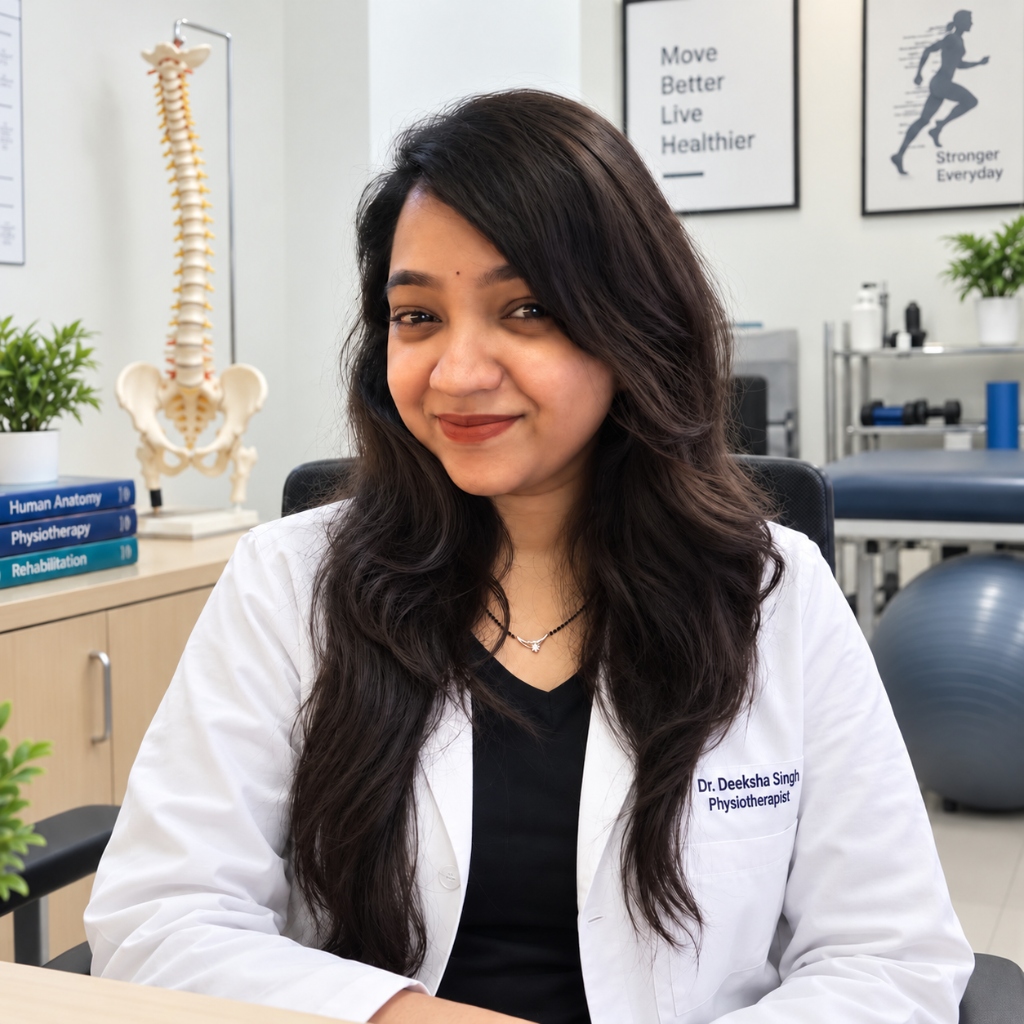
Dr. Deeksha Singh
BPT · MPT (Orthopaedics) · MIAP
All physical therapies and assessment-led roadmaps are designed and supervised by Dr. Deeksha.
View doctor profile →Your First Session
During your initial evaluation, we typically check:
- →Neurological status, muscle tone, and spasticity checks (e.g. Ashworth Scale)
- →Functional transfer check (lying to sitting, sitting to standing)
- →Balance and coordination check (Berg Balance or similar indicators)
- →Gait pattern and sensory check on the affected side
Common Interventions
- Task-Oriented Motor Retraining
- Proprioceptive Neuromuscular Facilitation (PNF)
- Passive Stretching & Spasticity Management
- Functional Balance & gait (walking) retraining
- NMES (Neuromuscular Electrical Stimulation) to help activate weak muscles
Stroke Rehabilitation FAQ
Frequently asked questions about therapy duration and outcomes.
How does physiotherapy support recovery after a stroke?
Through repetitive, structured movements, physical therapy encourages neuroplasticity. This helps the brain build new pathways to coordinate movements, helping restore motor function and balance.
How long should stroke physical therapy continue?
Recovery timelines vary. The most rapid neurological recovery occurs within the first 3 to 6 months, but patients can continue to show functional improvements with consistent, long-term therapy.
Related Rehabilitation Resources
Ready to start your recovery?
Book a clinic appointment or request a home physiotherapy visit.